Every laptop, server and mobile device on your network is a potential entry point for an attacker, and antivirus alone stopped being enough years ago. If you’re hunting for the best endpoint detection and response solutions, you’re probably reacting to a near miss, a compliance requirement, or simply the realisation that your current tooling can’t see what’s happening on your endpoints in real time. That gap is exactly where ransomware and credential theft take hold.
This guide answers the question directly: which EDR platforms actually deliver on threat detection, response speed and value for money in 2026. We’ve assessed each vendor against detection accuracy, ease of deployment, integration with wider security operations, and how well they support compliance obligations like ISO 27001, rather than just repeating marketing claims.
Below you’ll find ten platforms worth serious consideration, from established enterprise names to leaner tools built for SMBs with limited in-house expertise. We’ll cover strengths, trade-offs, and pricing considerations for each, plus what to check before you commit. Having deployed and managed these tools across client environments for years, we’ve included practical notes on where each solution fits best, so you can shortlist confidently rather than start from a blank page.
1. TrustedIA managed EDR and SOC services
TrustedIA doesn’t just sell you an EDR licence and leave you to work out the alerts yourself. We wrap endpoint detection and response inside a fully managed Security Operations Centre, so every alert generated by the endpoint agent gets triaged by an analyst before it ever lands in your inbox. That distinction matters more than most vendor comparisons let on: a tool is only as good as the team watching it, and most in-house IT departments don’t have the headcount to run 24/7 monitoring on top of their day job.
An EDR tool without a monitoring team behind it is a smoke alarm with no one home to hear it.
Key features
Our managed service combines endpoint telemetry with human oversight and the wider context of your cyber risk posture, rather than treating detection as an isolated task.
- 24/7 SOC monitoring of endpoint alerts, with analysts who investigate and act rather than just forward notifications
- CyberSOS incident response built in, so containment and recovery start immediately when something gets past prevention
- CRAFT posture assessment, our internally developed tooling, to benchmark your endpoint security against ISO 27001 and other frameworks
- Solution-agnostic deployment, meaning we fit the EDR engine to your environment rather than pushing one brand regardless of fit
- Integration with vulnerability assessments and penetration testing, so endpoint gaps get closed before attackers find them
Best for
This service suits small and medium-sized businesses and mid-market organisations that need genuine 24/7 coverage but don’t have the budget or appetite to build an internal SOC team. It’s also a strong fit for organisations working towards ISO 27001 certification, since the audit trail and documented response process from CyberSOS map directly onto what assessors want to see. Insurers and loss adjusters who need a dependable incident response partner for client engagements will find the same CyberSOS framework useful outside a standard EDR contract too.
Pricing overview
Pricing is quoted per endpoint and scales with the level of managed service you need, from monitoring-only through to full incident response retainer. We avoid one-size-fits-all packages because a ten-user consultancy and a 300-seat manufacturer have very different risk profiles and budgets. Get in touch through TrustedIA’s contact page for a quote based on your endpoint count, existing tooling, and compliance requirements, and we’ll tell you honestly if a lighter-touch option makes more sense than a full SOC contract.
2. SentinelOne Singularity Endpoint
SentinelOne built its reputation on autonomous AI-driven detection, and Singularity Endpoint is the product that made "EDR that doesn’t need constant babysitting" a realistic pitch rather than a sales line. The agent runs behavioural AI models locally on the device, which means it can spot and block malicious activity even when the endpoint is offline, something signature-based tools simply can’t do. For organisations that have outgrown basic antivirus but aren’t ready to commit to a fully managed SOC, it’s one of the stronger self-managed options on the market.

Key features
The platform leans heavily on automation, which suits teams that want strong protection without a large analyst bench watching dashboards all day.
- Storyline technology, which automatically maps an entire attack chain into a single narrative instead of dozens of disconnected alerts
- One-click remediation and rollback, restoring an endpoint to its pre-attack state, including reversing ransomware encryption in many cases
- Offline protection, since detection logic runs on the endpoint itself rather than depending on constant cloud connectivity
- Optional Ranger module for identifying unmanaged and rogue devices on the network
Automation only helps if it’s tuned to your environment, so budget time for onboarding rather than expecting it to run itself from day one.
Best for
Singularity Endpoint suits mid-sized to large organisations with at least a small internal security function capable of reviewing Storyline alerts and tuning policies. It’s a common choice for businesses that want strong autonomous response without the ongoing cost of a fully outsourced SOC.
Pricing overview
SentinelOne prices per endpoint on an annual subscription, with tiers separating core EDR from full XDR and identity add-ons. Expect list pricing to sit in the premium bracket compared with traditional antivirus vendors, and factor in extra cost if you want their managed detection add-on, Vigilance, layered on top.
3. CrowdStrike Falcon Insight
CrowdStrike built its name on stopping the big breaches you read about in the news, and Falcon Insight is the EDR module that sits at the heart of its wider Falcon platform. It’s a cloud-native agent, so there’s nothing bulky to manage on-premises, and the threat intelligence feeding it comes from one of the largest telemetry pools in the industry, drawn from millions of sensors across client environments. If you want a vendor with genuine nation-state and ransomware-gang tracking behind its detections, this is one of the few names that consistently shows up in independent testing at the top of the pack.
Key features
Falcon Insight’s strength lies in combining lightweight endpoint sensors with heavyweight backend analysis, so detection stays fast without overloading the device itself.
- Falcon OverWatch, a human-led threat hunting service that runs alongside the automated engine to catch anomalies AI alone might miss
- Real-time indicators of attack (IOAs), focused on behaviour rather than static signatures, catching novel techniques earlier
- Single lightweight sensor that also supports XDR, identity protection and cloud workload modules without extra agents
- Deep integration with CrowdStrike Falcon Intelligence, giving analysts context on who’s likely behind an attack
Falcon Insight earns its premium price mainly through the intelligence layer, not just the endpoint agent itself.
Best for
Falcon Insight suits larger enterprises and organisations in higher-risk sectors, such as finance or critical infrastructure, that need both strong automated detection and access to a dedicated hunting team. It’s less commonly the first choice for smaller businesses working with tight budgets.
Pricing overview
CrowdStrike prices modularly per endpoint, with Falcon Insight sitting above base antivirus tiers and OverWatch as a separate add-on. Enterprise procurement typically involves a sales conversation rather than published list prices, and total cost climbs quickly once you start layering on identity and cloud modules.
4. Microsoft Defender for Endpoint
Microsoft Defender for Endpoint has moved a long way from the bundled antivirus reputation it once had. Baked into the Microsoft 365 and Azure ecosystem, it now competes directly with dedicated EDR vendors on detection quality, and for organisations already running Windows and Microsoft 365 across the business, the integration argument is hard to ignore. Endpoint detection and response here isn’t a bolt-on product but a natural extension of infrastructure most companies already pay for.
Key features
Defender’s biggest advantage is context. Because it sits inside the same tenant as your identity, email and cloud workloads, it can correlate signals that a standalone endpoint agent would never see.
- Attack surface reduction rules that block common exploit techniques before they need detecting at all
- Automated investigation and remediation, which resolves a large share of routine alerts without analyst intervention
- Native integration with Microsoft Sentinel and Defender XDR, pulling identity, email and cloud signals into one investigation timeline
- Threat and vulnerability management built into the same console, linking detection to patching priorities
The tighter your business already sits inside Microsoft’s ecosystem, the more value Defender extracts from data you’re already generating.
Best for
Defender for Endpoint suits organisations already committed to Microsoft 365 E5 or equivalent licensing, particularly those without appetite for managing a separate third-party agent across every device. It’s a sensible default for mid-market businesses that want strong protection without a second vendor relationship to manage.
Pricing overview
Defender for Endpoint is sold in two tiers, Plan 1 and Plan 2, either standalone or bundled inside Microsoft 365 E5 and E5 Security licensing. Organisations already paying for E5 often get most of the capability at no extra cost, which is a genuine reason it’s gained ground against dedicated EDR vendors in recent years.
5. Sophos Intercept X Endpoint
Sophos built Intercept X around a simple idea: stop ransomware before encryption finishes, not after. Its deep learning malware detection is paired with a dedicated anti-ransomware layer called CryptoGuard, which rolls back files to their pre-attack state the moment it spots mass encryption behaviour. For businesses that have watched a peer get hit by ransomware and want a vendor with a specific answer to that exact scenario, Intercept X is one of the more focused best endpoint detection and response solutions on this list rather than a general-purpose platform trying to do everything at once.
Key features
Sophos leans on layered prevention first, with detection and response as the backstop rather than the only line of defence.
- CryptoGuard ransomware rollback, restoring encrypted files automatically without needing a backup restore
- Adaptive Active Adversary protection, which tightens controls automatically when it detects signs of an active intruder
- Optional Sophos Managed Detection and Response (MDR), giving smaller teams access to a 24/7 analyst service
- Unified management through Sophos Central, covering endpoints, firewalls and email from one console
A tool that stops ransomware mid-attack is worth more than one that simply tells you afterwards that you’ve been hit.
Best for
Intercept X suits small and medium-sized businesses that want strong ransomware-specific protection without running a full internal security operation. It also fits organisations already using Sophos firewalls or email security, since the Sophos Central console rewards that consolidation with clearer visibility.
Pricing overview
Sophos prices Intercept X per endpoint, with separate tiers for the core product and the MDR add-on. It generally sits in the mid-range compared with CrowdStrike and SentinelOne, making it a reasonable option for budget-conscious buyers who still want genuine ransomware rollback capability rather than detection alone.
6. Palo Alto Networks Cortex XDR
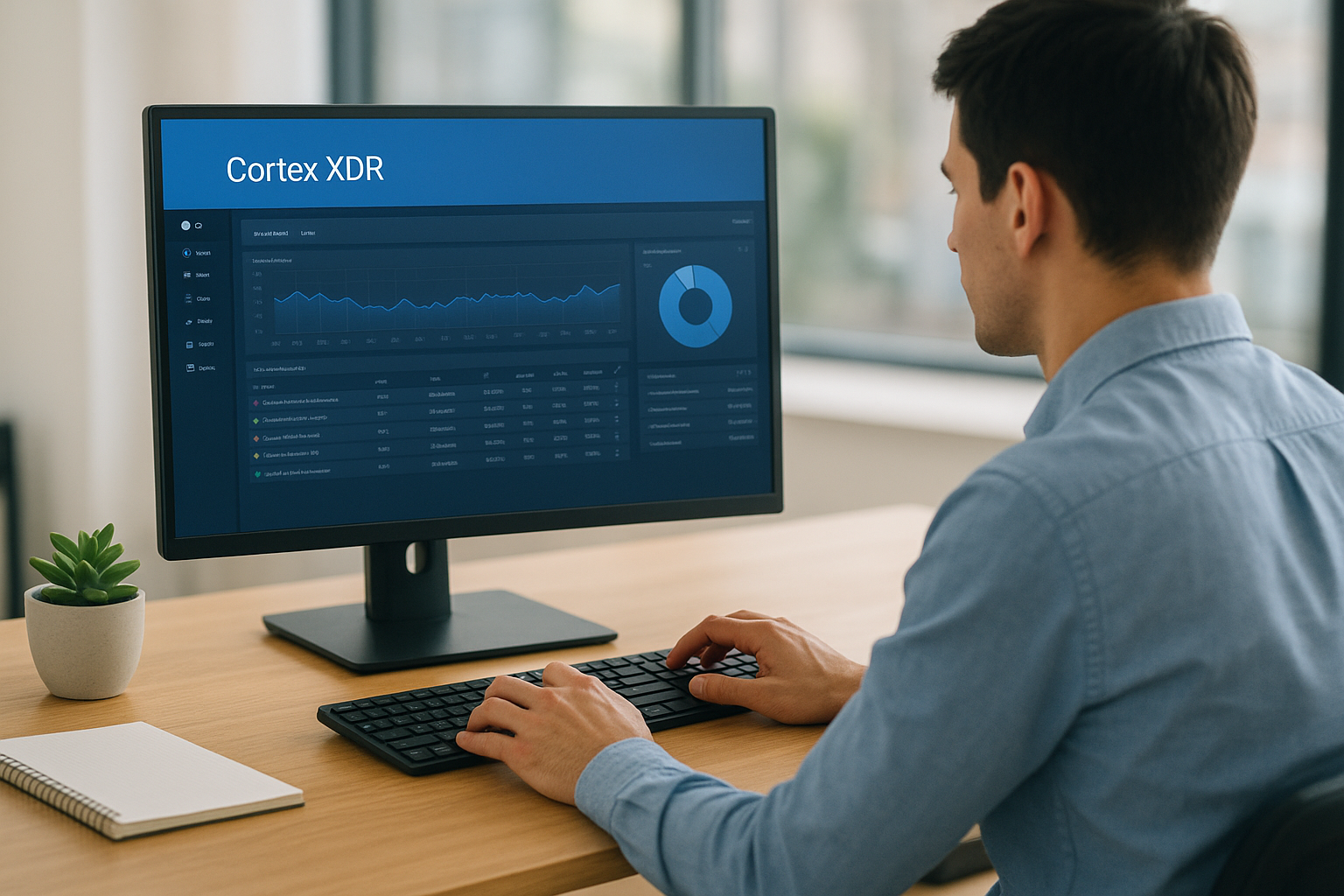
Cortex XDR was one of the first platforms to genuinely earn the "XDR" label rather than just rebadge an EDR product for marketing purposes. It pulls telemetry from endpoints, network traffic and cloud workloads into a single data lake, then applies machine learning across all three to spot patterns a single-source tool would miss entirely. If your business already runs Palo Alto firewalls, the payoff is immediate, since network and endpoint detection start correlating from day one instead of living in separate dashboards that nobody cross-references.
Key features
Cortex XDR’s advantage comes from breadth of data rather than a single clever detection trick, which shows in how it handles multi-stage attacks.
- Cross-data-source correlation, linking endpoint, network and identity signals into one incident rather than three separate alerts
- Behavioural analytics built on machine learning models trained across Palo Alto’s broader customer telemetry
- Host insights and forensics, giving analysts a full timeline without needing a separate forensic tool
- Integration with Cortex XSOAR for automated playbook-driven response across the wider security stack
XDR only outperforms EDR when you actually feed it data from more than just endpoints.
Best for
Cortex XDR suits mid-sized and large organisations with an existing Palo Alto Networks footprint, particularly those running its Next-Generation Firewalls, since the correlation value scales with how much of your security stack already sits inside the Palo Alto ecosystem. It’s less compelling as a standalone endpoint tool if you have no other Palo Alto products in place.
Pricing overview
Palo Alto prices Cortex XDR per endpoint with separate tiers for Prevent and Pro versions, the latter adding network and cloud data sources. Licensing conversations typically go through a partner or direct sales team rather than a public price list, and total cost rises noticeably once you add the broader data ingestion needed to justify the XDR label.
7. Trend Micro Vision One
Trend Micro built Vision One around the idea that endpoint telemetry alone tells only part of the story, so it pulls in email, network and server signals to give analysts a fuller picture of how an attack actually spreads. That breadth makes it one of the more rounded best endpoint detection and response solutions for businesses juggling a mixed estate of Windows, Linux and cloud workloads rather than a single tidy environment. Its XDR correlation engine has matured considerably since Trend Micro pivoted away from a purely antivirus heritage, and independent testing bodies now rate its detection consistently well against bigger-name rivals.
Key features
Vision One’s design favours visibility across the whole attack surface rather than treating the endpoint as an isolated data source.
- Attack surface risk management, scoring exposure across endpoints, cloud and identity before an incident even happens
- Workbench investigation console, correlating alerts from multiple sources into a single case rather than scattered tickets
- Optional Trend Micro Managed XDR, adding a 24/7 analyst layer for teams without in-house capacity
- Native cloud workload protection, extending detection beyond traditional laptops and servers
Correlating email and network data with endpoint alerts catches lateral movement that endpoint-only tools miss entirely.
Best for
Vision One suits mid-sized organisations running hybrid environments, particularly those already using other Trend Micro products, since the correlation benefits grow with wider deployment. It’s also a sound fit for teams wanting XDR-style visibility without committing to the higher price tier of Palo Alto or CrowdStrike.
Pricing overview
Trend Micro prices Vision One on a per-endpoint basis with modular add-ons for email, cloud and managed services. Costs generally land in the mid-range bracket, making it a reasonable middle ground between budget antivirus and premium enterprise XDR platforms.
8. Bitdefender GravityZone
Bitdefender has quietly built one of the strongest detection engines in the industry, and GravityZone packages that engine into a platform that punches well above its price point. Independent testing labs consistently rank Bitdefender’s machine learning detection among the most accurate on the market, yet the product carries none of the premium positioning you see from CrowdStrike or Palo Alto. For businesses that want genuine endpoint detection and response without paying an enterprise markup for a brand name, GravityZone is one of the better-value entries on this list.
Key features
GravityZone’s strength lies in layering multiple detection methods so a single evasion technique rarely gets an attacker all the way through.
- Risk analytics dashboard, scoring misconfigurations and vulnerable software across every managed endpoint
- HyperDetect tunable machine learning layer, catching fileless attacks and script-based threats that signatures miss
- Built-in patch management, closing a common attack vector without needing a separate tool
- Optional Bitdefender MDR, adding 24/7 human monitoring for teams without their own SOC
Strong detection scores mean little if the platform costs more than the risk it’s protecting against, and GravityZone rarely falls into that trap.
Best for
GravityZone suits small and medium-sized businesses that want enterprise-grade detection accuracy without enterprise-grade pricing. It also fits managed service providers looking for a multi-tenant console to run cyber risk management across several clients from one place.
Pricing overview
Bitdefender prices GravityZone per endpoint across several tiers, from a business essentials package through to Elite and Ultra bundles that add EDR, risk analytics and patching. It consistently lands towards the budget end of this list, making it a strong shortlist candidate for cost-conscious buyers who still want credible detection results.
9. Cybereason Endpoint Detection and Response
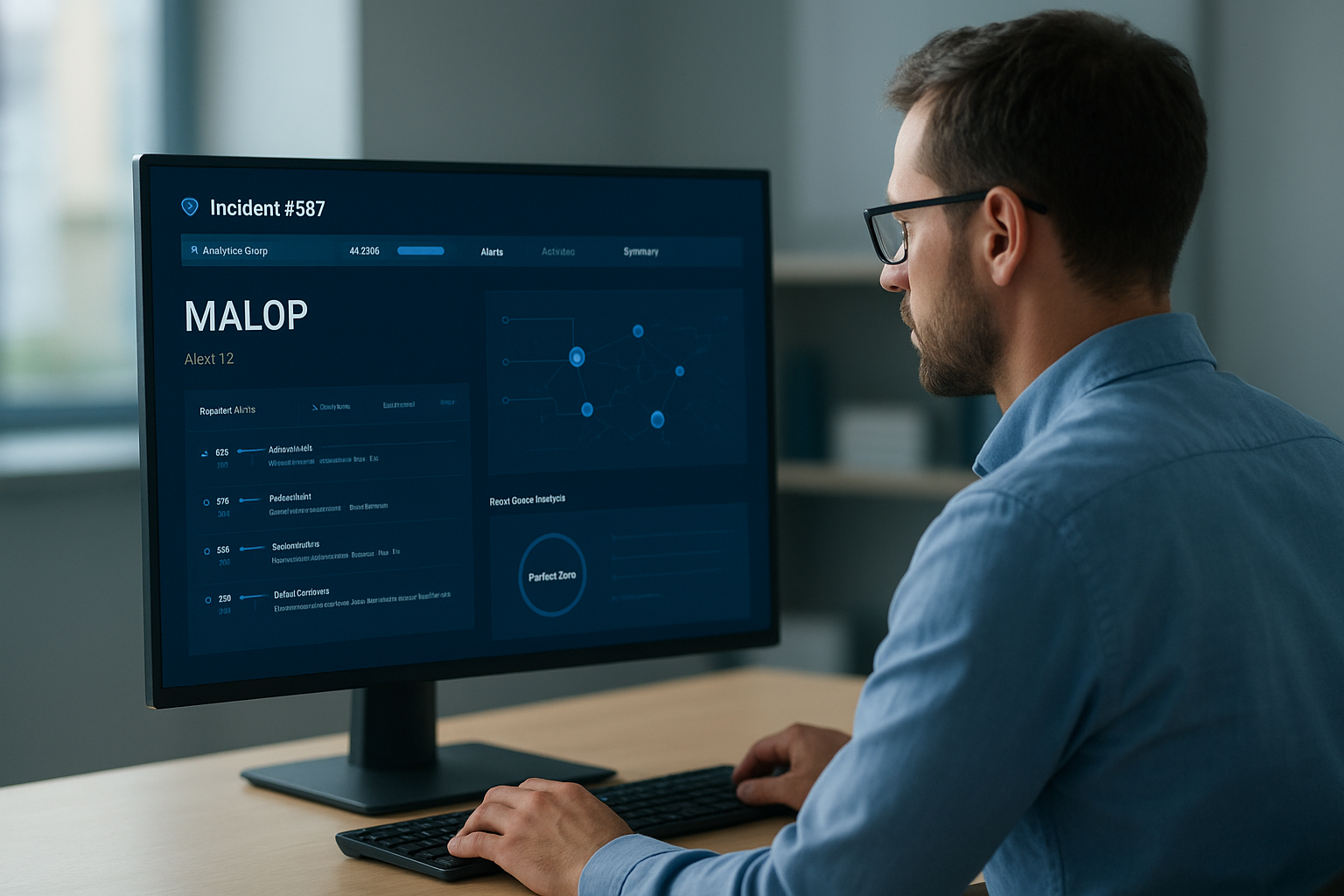
Cybereason takes a different angle on the same problem: instead of showing analysts a pile of individual alerts, its MalOp (Malicious Operation) detection groups every related event, across every affected machine, into a single incident view. That matters when an attack spreads across ten endpoints in minutes, since piecing together a scattered timeline manually costs you the time you actually need to contain it. It’s a platform built by a team with genuine offensive security backgrounds, and that shows in how the detection logic anticipates attacker behaviour rather than just matching known patterns.
Key features
Cybereason’s console is built around reducing analyst workload by presenting attacks as a single story rather than a stream of disconnected notifications.
- Cross-machine correlation, mapping an entire attack across multiple endpoints into one MalOp rather than separate cases
- Root cause analysis, pinpointing patient zero automatically instead of leaving analysts to trace it backwards
- NGAV built in, combining next-generation antivirus with EDR under one lightweight sensor
- Optional Cybereason MDR, adding 24/7 monitoring for organisations without a dedicated SOC
Grouping related alerts into one incident saves the hours most teams lose reconstructing an attack timeline by hand.
Best for
Cybereason suits mid-sized organisations with some internal security capability that want faster, clearer investigation rather than raw automation alone. It’s a solid fit for businesses that have found other platforms generate too much alert noise and want a detection and response tool that prioritises clarity over volume.
Pricing overview
Cybereason prices per endpoint, with EDR, NGAV and MDR available as separate or bundled tiers depending on how much managed coverage you need. Costs sit roughly in line with SentinelOne and CrowdStrike, so it’s rarely the cheapest option, but it’s competitive for the correlation capability you get in return.
10. Huntress Managed EDR
Huntress built its reputation among managed service providers who needed endpoint detection and response without hiring their own analyst team. Rather than competing on flashy AI marketing, Huntress focuses on catching the footholds attackers leave behind after they’ve slipped past prevention tools, then handing a human-reviewed verdict straight to the client’s IT provider. For businesses that rely on an MSP for day-to-day IT support, this is often the most practical route into proper endpoint monitoring rather than trying to run a platform in-house.
A tool that tells an MSP exactly what happened and what to do next is worth more to a small business than one that just generates another alert queue.
Key features
Huntress keeps its footprint deliberately lightweight, leaning on its 24/7 threat operations centre to do the heavy lifting that smaller teams can’t staff themselves.
- Persistent footprint detection, hunting for the techniques attackers use to survive a reboot, a common gap in prevention-only tools
- Human-verified alerts, with analysts confirming genuine threats before anything reaches the client, cutting false-positive fatigue
- Ransomware canaries, decoy files that trigger an immediate response the moment encryption activity touches them
- Built-in Microsoft 365 identity protection, extending coverage beyond the endpoint into common cloud account compromise
Best for
Huntress suits small and medium-sized businesses that access security through a managed service provider rather than running their own security team. It’s also a strong fit for MSPs themselves, since the multi-tenant console and analyst backup let a small IT team offer credible compliance support without hiring dedicated security staff.
Pricing overview
Huntress prices per endpoint on a monthly subscription, typically sold through MSP partners rather than directly to end businesses. It sits at the more affordable end of this list, reflecting its focus on lean detection rather than the broader XDR data ingestion that pushes up cost elsewhere.
11. How to choose the right EDR solution for your business
Matching a vendor to your environment matters more than chasing the highest score on an independent test. Start by mapping your existing security stack: if you’re already deep into Microsoft 365 or Palo Alto firewalls, that ecosystem fit often outweighs marginal detection differences between platforms. Look next at your internal capacity, since a tool that generates excellent alerts is worthless if nobody’s available to act on them at 2am on a Sunday.
The best EDR platform is the one your team can actually run, not the one with the longest feature list.
Budget realistically too. Per-endpoint pricing scales quickly once you add MDR, XDR modules or identity protection, so model total cost at your actual headcount rather than the entry-level price quoted in a sales deck. Finally, weigh compliance requirements explicitly if you’re working towards ISO 27001 or a similar framework, since some platforms produce audit-ready reporting far more easily than others.
Use this checklist before you sign anything:
- Does the vendor’s detection integrate with tools you already run, or will it sit in isolation?
- Can your team realistically monitor alerts around the clock, or do you need a managed option layered on top?
- What’s the fully loaded cost per endpoint once add-ons like MDR or threat hunting are included?
- Does the platform produce reporting that maps onto your compliance framework without manual reformatting?
- How quickly can the vendor demonstrate response during an active incident, not just detection in a demo?
Organisations without a dedicated security team almost always get better outcomes from a managed service than a self-run licence, purely because response speed depends on someone watching, not just the software doing the watching.
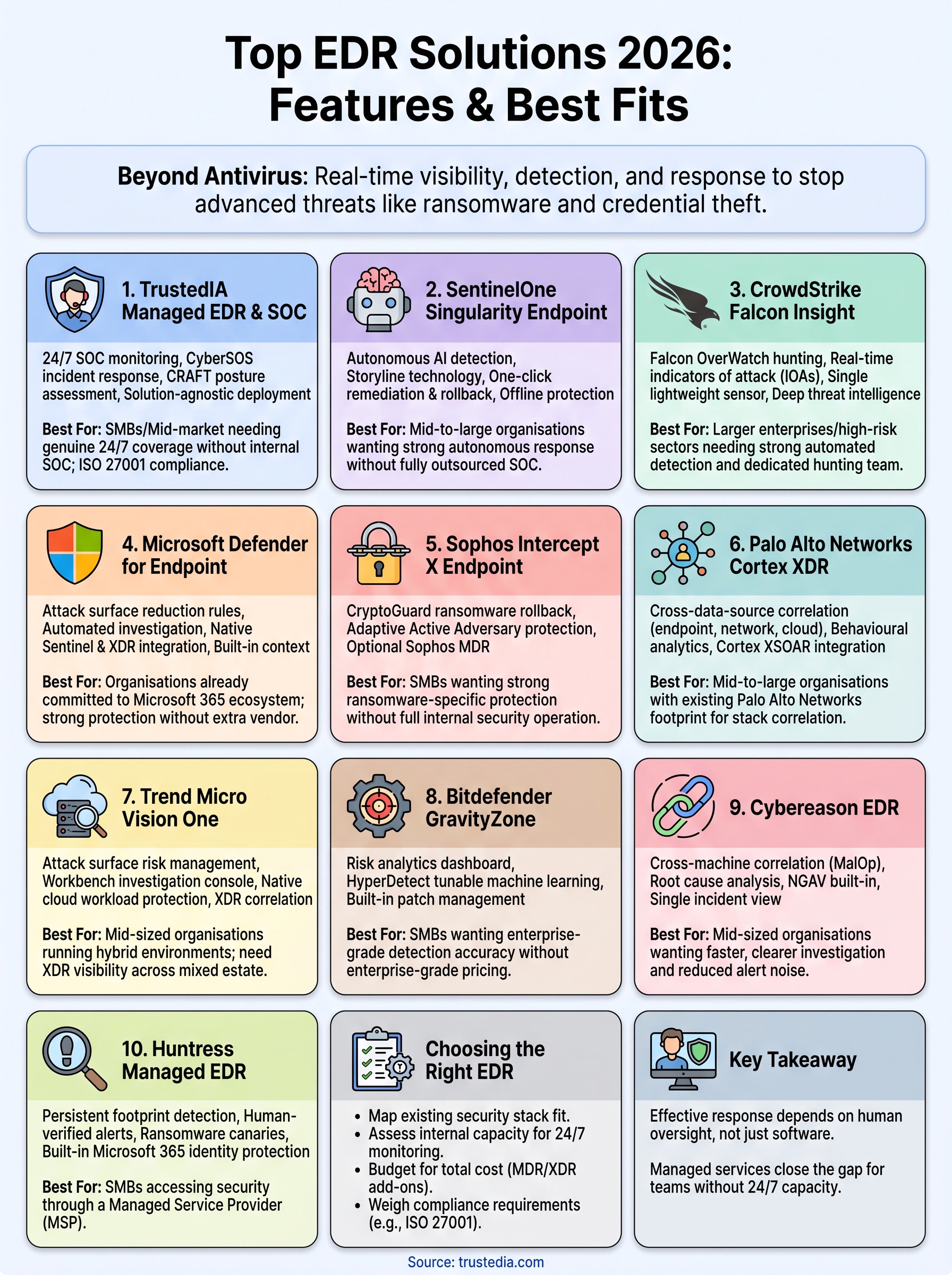
Making sense of your EDR options
Ten platforms, one conclusion: the best endpoint detection and response solutions aren’t defined by feature lists alone, they’re defined by whether someone competent is watching them work. SentinelOne, CrowdStrike and the other tools covered here are genuinely capable engines, but an engine without a driver still won’t get you anywhere useful at 3am when an alert fires.
Pick based on what you can realistically staff and monitor, not on the longest spec sheet. If your team already carries a full workload managing infrastructure and can’t add 24/7 triage on top, a managed service closes that gap far more reliably than another dashboard nobody has time to check.
That’s precisely where our own approach fits. If you’d rather have analysts handling detection while you focus on running the business, get in touch with TrustedIA and we’ll talk through what genuine endpoint coverage should look like for your environment.