Most SMEs know they need to comply with GDPR, but few can pinpoint exactly where their gaps are. A GDPR gap analysis service gives you that clarity, a structured assessment that maps your current data protection practices against the regulation’s requirements and identifies the specific areas where you fall short. Without it, you’re essentially guessing at compliance, which is a risk no business should take willingly.
The problem is that GDPR covers a lot of ground: lawful bases for processing, data subject rights, breach notification procedures, third-party contracts, records of processing activities, and more. For small and medium-sized businesses without a dedicated data protection team, knowing what to assess, and how to assess it properly, is half the battle. That’s where professional guidance makes a real difference, turning a vague sense of "we should probably sort this out" into a concrete action plan with clear priorities.
At TrustedIA, we bring over 30 years of experience in IT services and cybersecurity, including ISO 27001 implementation and compliance support, to help organisations understand and strengthen their security and data protection posture. Our solution-agnostic approach means we focus on what actually works for your business, not on pushing a particular product. This guide breaks down what a GDPR gap analysis service involves, why SMEs specifically benefit from one, and how to choose the right provider for your organisation.
What a GDPR gap analysis service covers
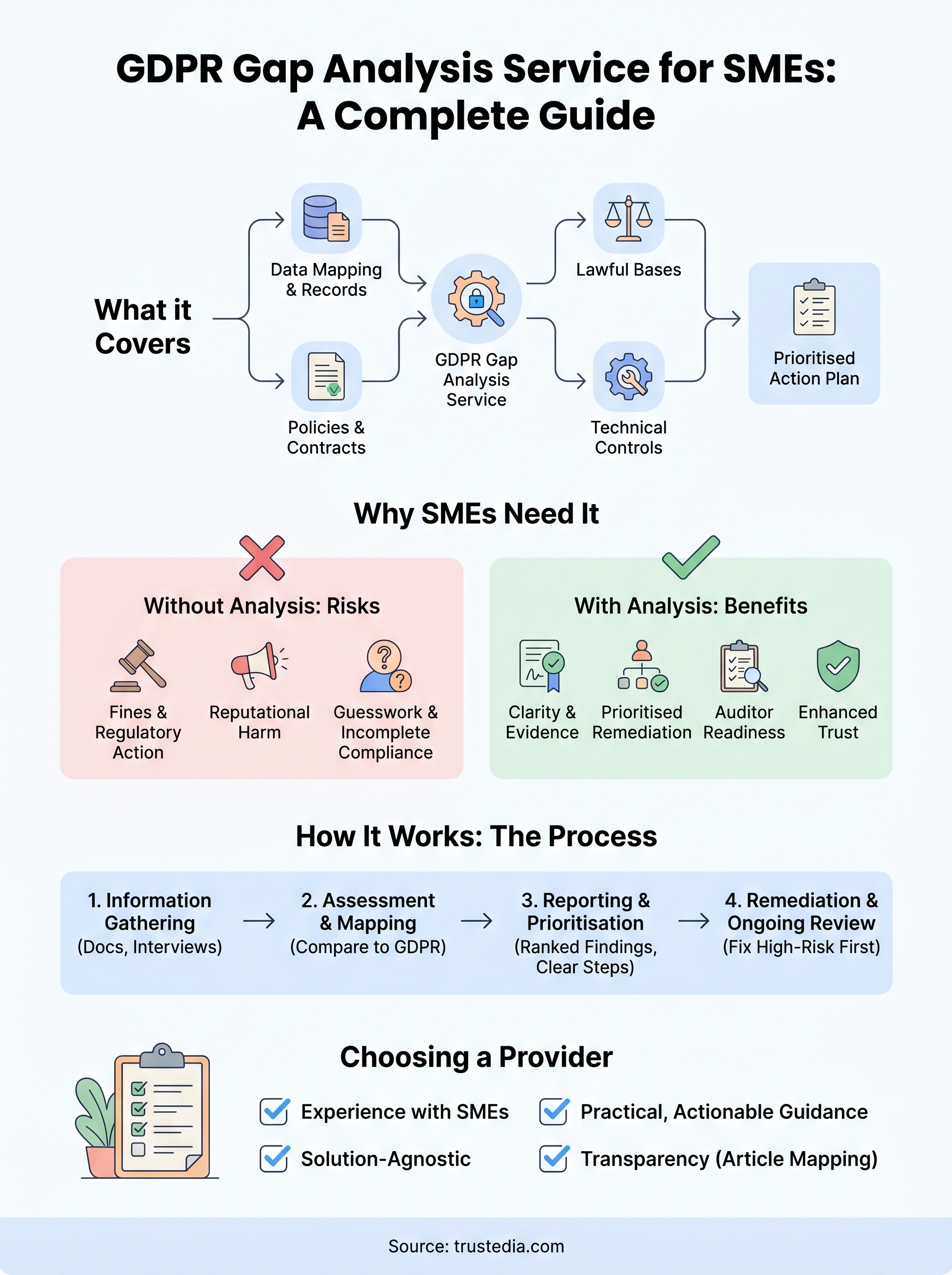
A GDPR gap analysis service reviews your organisation against the key requirements of the UK GDPR and the Data Protection Act 2018. The assessment works through several distinct areas of your data handling practices, comparing what you currently do with what the regulation actually requires. The output is a prioritised list of gaps, not a vague report full of legal jargon, but specific findings tied to specific articles and obligations.
Data mapping and processing records
Before any gap can be identified, a provider needs to understand what personal data you hold, where it lives, and how it moves through your business. This means building or reviewing your Records of Processing Activities (RoPA), which Article 30 of the UK GDPR requires most organisations to maintain. Without an accurate data map, any compliance assessment is incomplete.

An accurate RoPA is the foundation of any meaningful GDPR assessment; without it, you cannot identify what you are protecting or where your risks actually sit.
The review also examines your lawful bases for processing, checking whether you have documented them correctly and whether they hold up for each processing activity you carry out.
Policies, contracts, and technical controls
Your written policies are another major area of scrutiny. A gap analysis checks whether your privacy notice, data retention policy, and data breach procedure are in place, up to date, and actually reflect what your organisation does in practice. Policies that exist on paper but are not followed represent a real compliance risk.
Technical and organisational controls also form part of the review. This includes access controls, encryption practices, and supplier contracts, particularly data processing agreements with any third party that handles personal data on your behalf.
Why SMEs use a GDPR gap analysis
Most SMEs operate without a dedicated Data Protection Officer or in-house legal team, which means compliance responsibilities fall on people who have other priorities. A GDPR gap analysis service gives you an external, expert review precisely when internal knowledge runs thin. Rather than piecing together guidance from multiple sources, you get a single, structured assessment that tells you exactly where you stand.
The cost of getting it wrong
The ICO has the power to issue fines of up to £17.5 million or 4% of your annual global turnover, whichever is higher, for serious infringements. For an SME, even a modest fine can cause serious financial damage. Beyond fines, a data breach can erode customer trust and trigger reputational harm that takes years to undo.
Regulatory action is not reserved for large enterprises; the ICO investigates and fines businesses of all sizes.
Clarity over guesswork
Many SMEs assume their data practices are broadly compliant when they are not. Running a gap analysis gives you documented evidence of your compliance posture rather than an educated guess. It also helps you prioritise remediation work logically, so your team focuses effort where the regulatory risk is highest.
Your gap analysis report also gives you something concrete to show auditors, clients, or insurers who ask about your data protection measures. Having a documented baseline makes those conversations significantly more straightforward.
How a GDPR gap analysis service works
A typical gdpr gap analysis service follows a structured process that moves from information gathering through to a prioritised remediation report. Most providers start by collecting documentation about your current data handling, including policies, contracts, and processing records, before conducting interviews with key staff. This gives the assessor a realistic picture of your actual practices, not just what your written documents say.
Assessment and reporting
Once the initial review is complete, the provider maps your practices against each relevant GDPR article and obligation, identifying where shortfalls exist and how significant each one is. You receive a report that ranks findings by risk level, so you know which issues to address first rather than trying to fix everything at once.
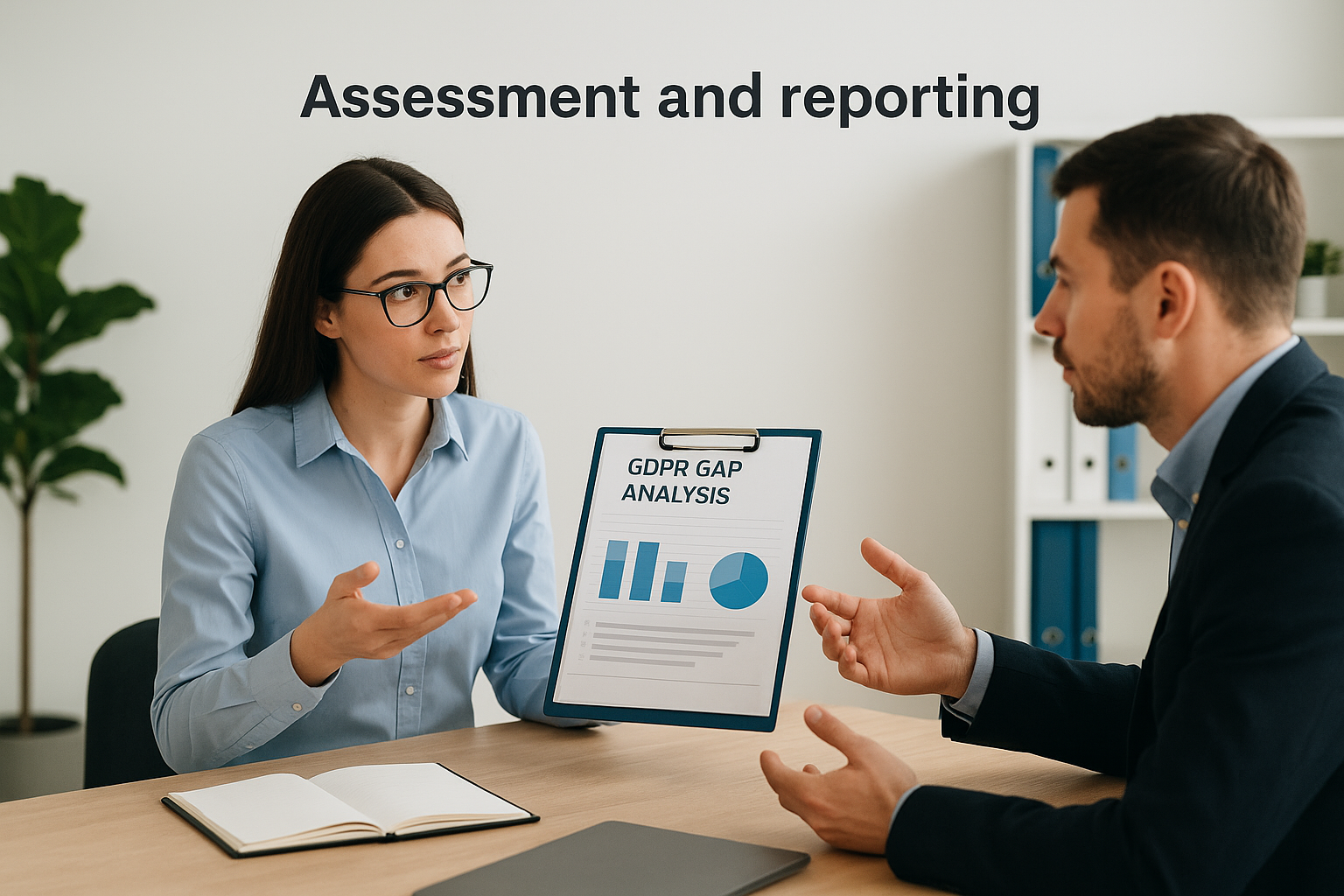
A well-structured gap analysis report does not just list problems; it tells you what to do about them in a practical, prioritised order.
Your provider should also walk you through the findings in a debrief session, giving you the opportunity to ask questions and clarify next steps before remediation work begins. That conversation is often where the real value sits, because it allows you to connect the findings directly to your business context and budget.
What to look for in a GDPR gap analysis provider
Not every provider delivers the same quality of assessment. Knowing what to evaluate before you commission a gdpr gap analysis service saves you time and money. Look for a provider with demonstrable experience in UK data protection law, not just generic compliance consulting.
Practical experience over certification alone
Qualifications matter, but hands-on experience with SMEs similar to yours carries more weight. Ask whether the provider has worked with small businesses specifically, since compliance challenges at that scale differ significantly from those facing a large enterprise.
A provider who understands your operational constraints will deliver more realistic, actionable remediation steps rather than generic recommendations that ignore your budget or team size.
The best gap analysis providers give you practical next steps, not just a list of regulatory obligations you already knew existed.
Independence and transparency
Your provider should be solution-agnostic, meaning they have no financial incentive to push specific tools or platforms. Check that their report includes clear references to the relevant GDPR articles so you can verify findings independently. Ask these questions before you commit:
- Do they provide a sample report structure upfront?
- Can they reference similar SME clients they have worked with?
- Are all findings mapped to specific articles of the UK GDPR?
Common GDPR gaps SMEs find and how to close them
Running a gdpr gap analysis service consistently surfaces the same problems across SMEs. While every organisation is different, certain gaps appear repeatedly, and understanding them in advance helps you approach your own assessment with realistic expectations.
Recognising common gaps before your assessment means you can gather the right documentation and evidence from the start.
The gaps that appear most often
Missing or outdated privacy notices top the list, followed by an absence of documented lawful bases for processing personal data. Many SMEs also lack signed data processing agreements with third-party suppliers who handle personal data on their behalf, which creates a direct compliance breach under Article 28 of the UK GDPR.
Closing these gaps is more straightforward than it sounds with the right guidance. You need to work through each finding methodically:
- Update your privacy notice to reflect your actual processing activities
- Document a lawful basis for each processing purpose you carry out
- Audit all third-party suppliers and put signed data processing agreements in place
- Create or formalise a data breach response procedure with defined roles and timescales
Next steps for safer data handling
Once you have your gap analysis findings in hand, the next move is to work through remediation in a structured order rather than trying to fix everything at once. Start with the highest-risk gaps identified in your report, since these carry the greatest regulatory exposure, and build a realistic timeline around your team’s capacity. GDPR compliance is not a one-time project; it requires ongoing review as your business processes and the regulatory landscape evolve.
Choosing the right partner makes this process significantly more manageable. A gdpr gap analysis service from an experienced provider gives you a clear baseline, a prioritised action plan, and the expert input you need to close gaps confidently. TrustedIA works with SMEs across the UK to strengthen their data protection posture through practical, evidence-based guidance. If you are ready to understand exactly where your organisation stands on data protection, contact the TrustedIA team to start your assessment.