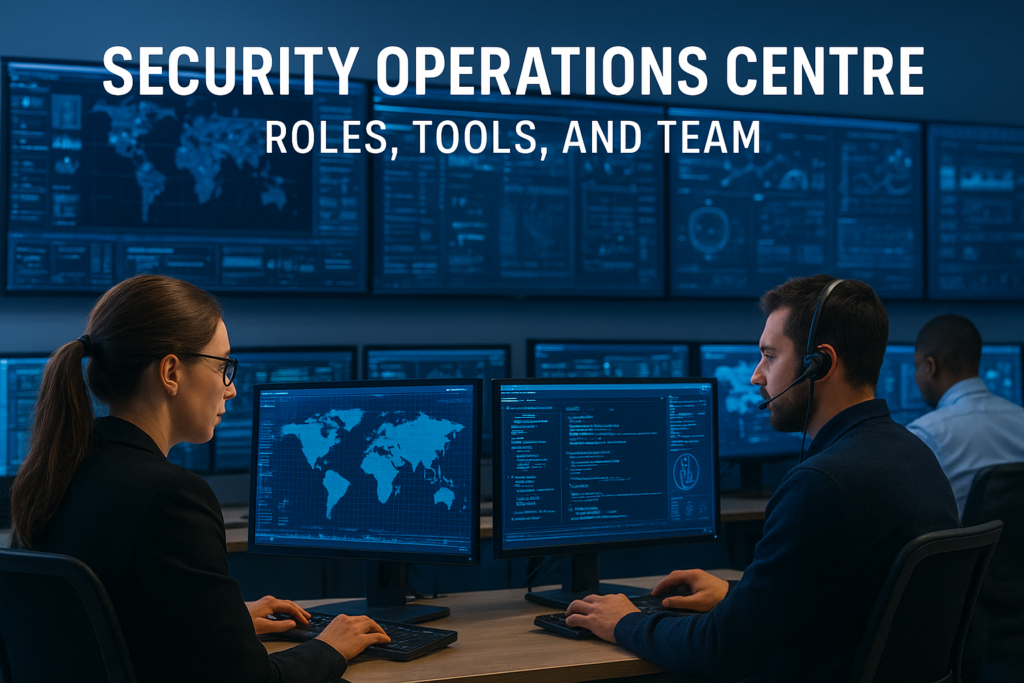
A security operations centre definition might sound straightforward, a team that monitors and responds to cyber threats. But the reality behind those words involves a layered operation of people, processes, and technology working around the clock to keep businesses running. Getting that definition right matters, because understanding what a SOC actually does is the first step toward knowing whether your organisation needs one, and what to expect from it.
At its core, a SOC exists to detect threats early, respond quickly, and reduce the damage a cyber incident can cause. It sits at the centre of an organisation’s defensive strategy, acting as the nerve centre for security monitoring, analysis, and coordinated response. Without it, threats go unnoticed longer, and recovery takes more time and money. For many businesses, especially those without large in-house security teams, outsourcing SOC capabilities to a managed security provider is the most practical path forward.
At TrustedIA, we operate a Security Operations Centre as part of our managed security services, built on over 30 years of experience protecting UK businesses from cyber threats. That hands-on expertise shapes everything in this article. Below, we break down what a SOC is, who works inside it, the tools they rely on, and how the whole operation fits into a broader cybersecurity strategy, giving you a clear, practical understanding you can act on.
Why a SOC matters for UK organisations
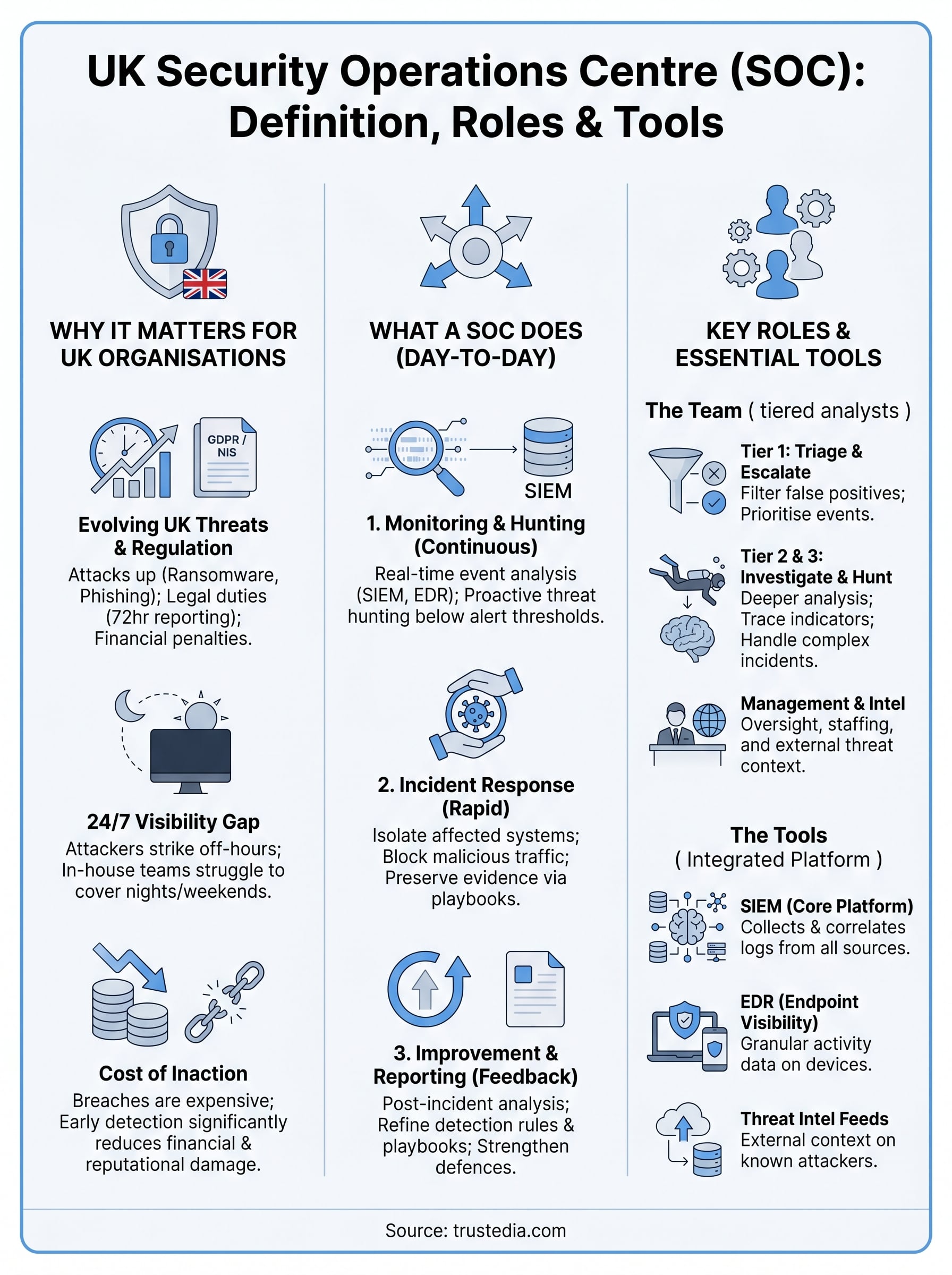
The UK faces a high volume of cyber attacks, and businesses of all sizes are in the crosshairs. According to the UK government’s Cyber Security Breaches Survey, over half of UK businesses reported a cyber attack or breach in the past year. That figure reflects a reality many organisations still underestimate: cyber threats are not theoretical risks; they are daily occurrences that can shut down operations, expose customer data, and trigger serious financial and reputational damage. A SOC gives you the continuous visibility needed to catch threats before they escalate into full incidents.
The UK threat landscape has shifted
UK organisations now face a broader and more aggressive range of threats than they did five years ago. Ransomware attacks have increased in both frequency and sophistication, with attackers specifically targeting sectors such as healthcare, finance, manufacturing, and professional services. Phishing campaigns routinely bypass standard email filters, while supply chain attacks are increasingly common, meaning that even if your own systems are well-configured, a compromised third-party vendor can still open the door to attackers. A SOC monitors across all of these vectors, not just the obvious entry points.
Without continuous monitoring, most organisations only discover a breach after significant damage has already been done.
Attackers do not work nine-to-five. Many intrusions happen outside business hours, precisely because that is when response times are slowest and defences are thinnest. Overnight and weekend coverage is one of the most practical reasons UK businesses turn to a managed SOC, rather than relying solely on an internal team that cannot provide round-the-clock visibility.
Regulatory obligations add real pressure
UK GDPR and the Network and Information Systems (NIS) Regulations place clear legal requirements on organisations to protect personal data and report breaches to the Information Commissioner’s Office within 72 hours of becoming aware of them. Failing to meet those obligations can result in significant fines. A SOC helps you satisfy these requirements by detecting incidents faster, maintaining detailed audit logs, and ensuring your incident response process runs within the required timeframe.
For businesses operating in regulated sectors such as financial services, the pressure is even more direct. The Financial Conduct Authority expects firms to have robust operational resilience frameworks in place, which includes rapid detection and response capabilities. A functioning SOC is often central to demonstrating that you hold those controls in practice, not just on paper.
The financial case is straightforward
The average cost of a data breach in the UK continues to climb. Once you factor in downtime, recovery costs, regulatory fines, customer compensation, and reputational damage, the total can be severe for any organisation. Small and medium-sized businesses are particularly exposed because they often lack the internal resource to detect and contain an incident quickly, meaning breaches run longer and cost significantly more. Investing in SOC capability, whether in-house or through a managed provider, directly reduces that financial exposure by shortening the time between initial compromise and active response.
Returning to the security operations centre definition in practical terms means recognising that a SOC is not just a technical function. It is a business protection investment, and for most UK organisations, the cost of running or outsourcing a SOC is far lower than the cost of recovering from a breach that went undetected for days or weeks.
What a SOC does day to day
Understanding the day-to-day operations of a SOC is just as important as grasping the security operations centre definition itself. A SOC is not a passive function waiting for alerts to arrive in an inbox. Analysts actively hunt for threats, triage incoming events, investigate suspicious behaviour, and coordinate responses when something serious surfaces. The work organises itself around three core activities: monitoring, responding, and improving.
Continuous monitoring and threat detection
SOC analysts review security events and logs from across your entire environment in real time. That includes endpoints, servers, network traffic, cloud platforms, and user activity. Most SOCs rely on a Security Information and Event Management (SIEM) platform to aggregate this data into a single view, allowing analysts to spot anomalies that would be invisible in isolation. A spike in failed login attempts from an unusual location, for example, might look routine on its own but signals a credential-stuffing attack when correlated with other data points.
Effective threat detection is not about having more data; it is about knowing which signals matter and acting on them fast.
Threat hunting goes beyond waiting for automated alerts to trigger. Proactive analysts move through your environment looking for indicators of compromise that tools have not yet flagged. Sophisticated attackers often operate below alert thresholds for days or weeks before executing their main objective, which is exactly why human-led hunting matters alongside automated detection.
Incident response and containment
When a confirmed threat surfaces, the SOC shifts into active response mode. Analysts isolate affected systems, block malicious traffic, revoke compromised credentials, and preserve forensic evidence for later analysis. The speed of this response directly determines how far an attacker can move through your environment, making rapid containment one of the highest-value functions a SOC provides.
Incident response playbooks guide analysts through each step, ensuring consistent, documented action regardless of who is on shift. These playbooks reduce the risk of critical steps being missed during high-pressure situations and give you a clear record of everything that happened.
Reporting and continuous improvement
After each incident, the SOC produces a post-incident report that documents what happened, how the threat was detected, what actions were taken, and what changes should prevent a recurrence. This creates a feedback loop that strengthens your detection rules, updates your playbooks, and identifies gaps in coverage before attackers find them. Each incident, handled properly, makes the next one less damaging.
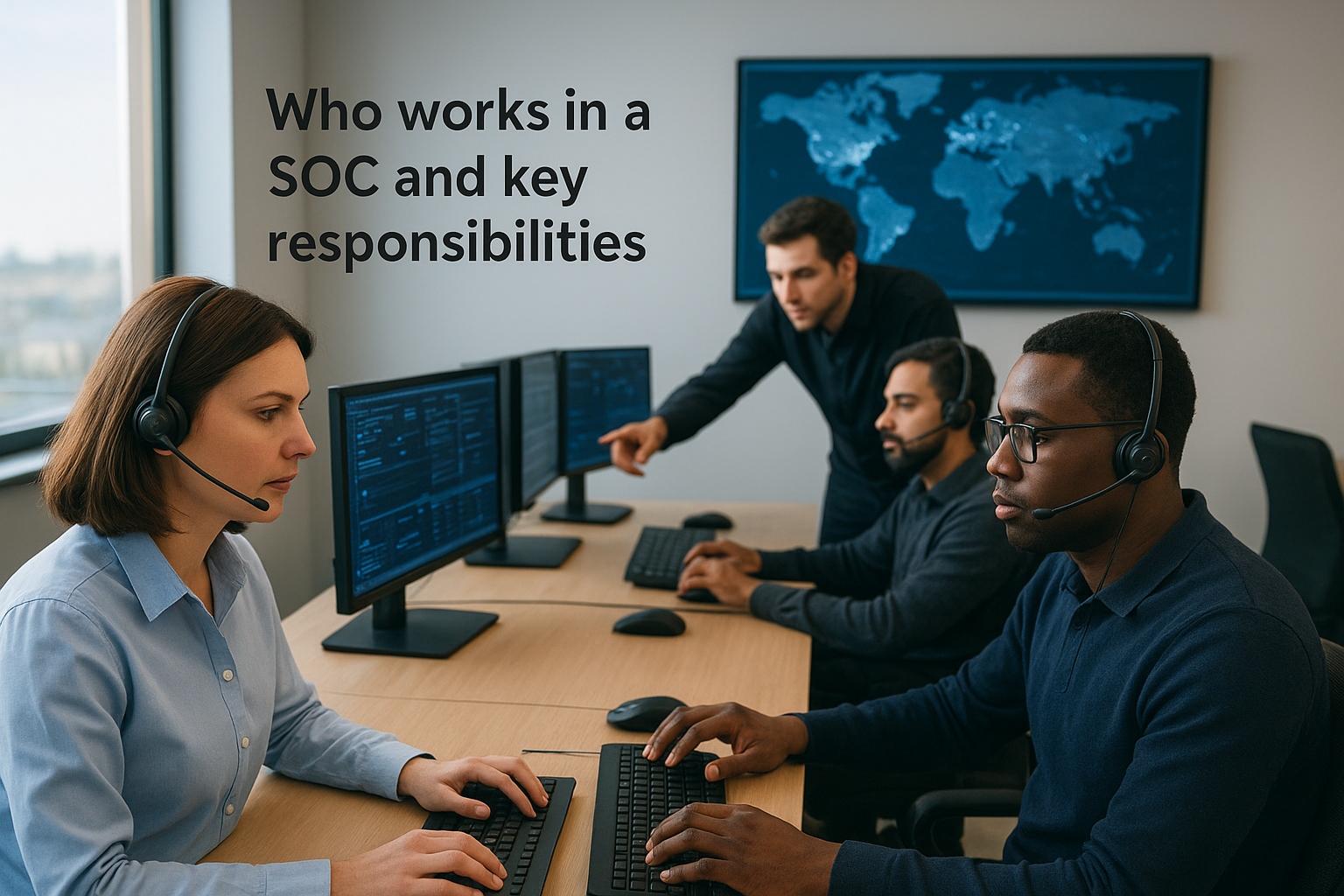
Who works in a SOC and key responsibilities
A SOC does not run on technology alone. The people inside it determine how quickly threats get identified and how effectively your organisation responds when something goes wrong. Most SOCs structure their analysts into tiers based on experience and responsibility, with each tier handling a different depth of investigation. Understanding these roles helps you evaluate whether a SOC, in-house or managed, has the staffing model to genuinely protect your environment.
Tier 1: Alert triage analysts
Tier 1 analysts are the first to see incoming alerts. Their job is to assess each event, filter out false positives, and escalate genuine threats to the next tier. They work from established playbooks and need to move quickly, because the volume of alerts a modern SOC handles daily is substantial.
Key Tier 1 responsibilities include:
- Monitoring the alert queue in real time
- Classifying and prioritising security events
- Escalating confirmed or suspected threats to Tier 2
The pace of your Tier 1 team determines how quickly every subsequent response step begins.
Tier 2 and Tier 3: Investigation and expertise
Tier 2 analysts handle escalated incidents and conduct deeper investigation. They trace indicators of compromise across your environment, examine attacker behaviour, and work to contain threats before they cause wider damage. Their role requires stronger technical depth and a solid understanding of how modern attacks unfold.
Tier 3 brings the most senior technical knowledge to the SOC. These analysts lead threat hunting, refine detection rules, and handle the most complex incidents. Their work directly shapes how the security operations centre definition applies in practice, adapting your SOC’s processes as the threat landscape evolves.
SOC management and threat intelligence
SOC managers oversee daily operations, manage staffing, and ensure playbooks stay current. They report to senior leadership and act as the link between technical operations and broader business priorities.
Many SOCs also include threat intelligence specialists who track emerging attack campaigns and translate that knowledge into updated detection logic. These roles complete the team structure, ensuring the SOC operates as a coordinated unit rather than a collection of isolated analysts working through queues independently.
What tools and data a SOC needs
Technology underpins every function described in the security operations centre definition, but the right toolset is not just about buying the most expensive platform. It is about having tools that work together, feed analysts the right information at the right time, and reduce the number of threats that slip through undetected. Without coherent tooling and quality data, even a skilled team will struggle to operate effectively.
SIEM and log management
A Security Information and Event Management (SIEM) platform sits at the core of most SOC environments. It collects log data from across your entire infrastructure, including endpoints, servers, firewalls, and cloud services, and correlates that data to surface meaningful alerts. Raw logs from individual systems rarely tell a complete story, but a SIEM brings those signals together so analysts can see patterns that would otherwise stay hidden.
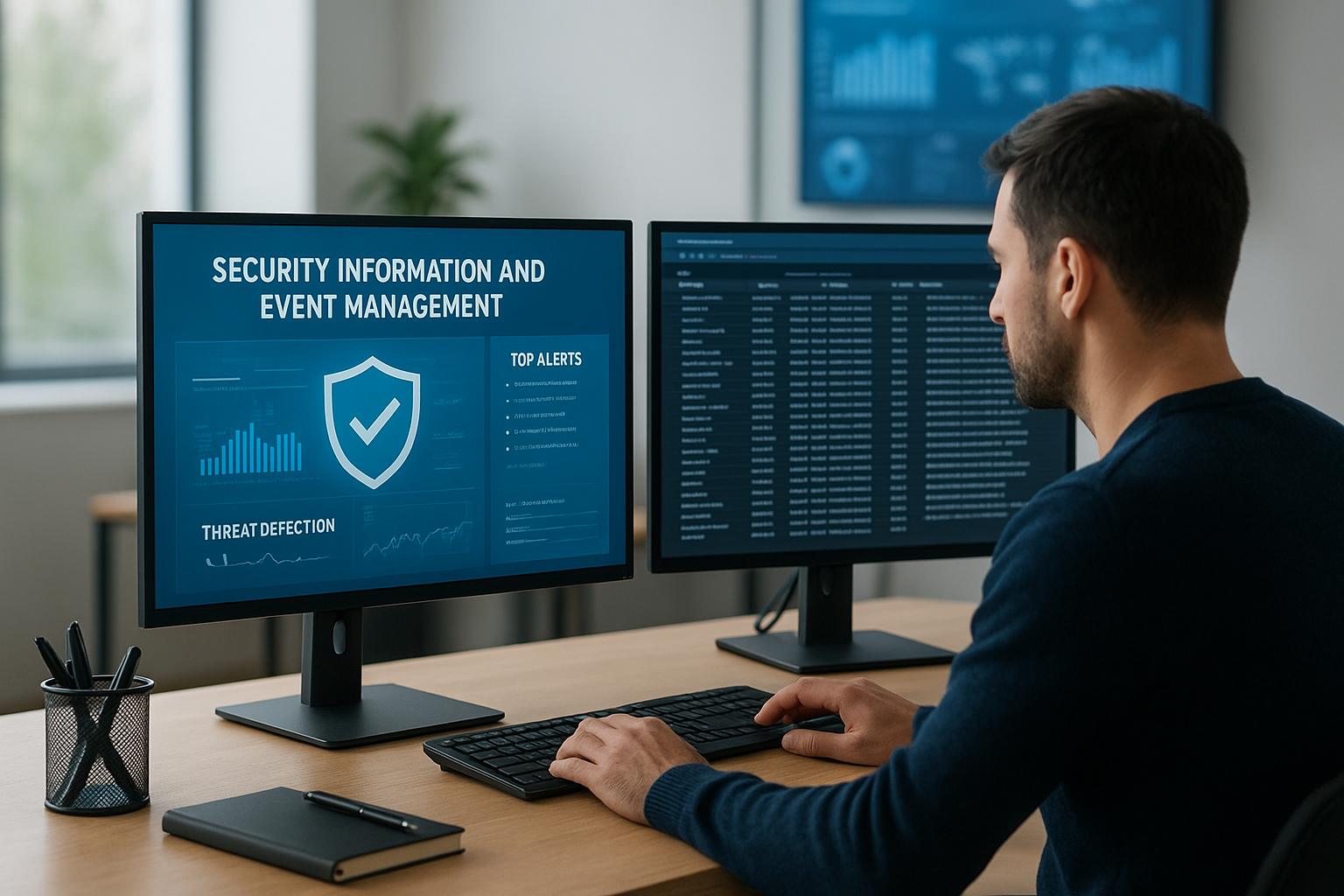
The data sources feeding into a SIEM determine how much visibility your SOC actually has. A well-configured environment typically pulls from:
- Endpoint detection and response (EDR) agents on devices
- Network traffic logs and firewall records
- Identity and access management systems
- Cloud platform activity logs (such as Microsoft Azure or Google Cloud audit logs)
- Email security gateways
The quality of your SOC’s detection is only as good as the completeness and accuracy of the data it receives.
Endpoint detection and threat intelligence feeds
Endpoint Detection and Response (EDR) tools give SOC analysts granular visibility into what is happening on individual devices. They record process activity, file changes, and network connections at the endpoint level, which is critical for tracing how an attacker moved through your environment after initial access. Without EDR coverage, large portions of your attack surface remain blind spots.
Threat intelligence feeds complement your internal data by providing external context about known attacker techniques, malicious IP addresses, and active campaigns targeting your industry. Analysts use this intelligence to update detection rules, prioritise which alerts deserve immediate attention, and understand whether an indicator found in your environment links to a broader, organised attack. Together, these tools give your SOC the depth of information needed to move from reactive alert-handling to proactive threat management.
How to set up a SOC model that fits
Choosing the right SOC model starts with an honest assessment of your current resources, risk profile, and operational requirements. There is no single correct structure that suits every organisation. The security operations centre definition describes a function, not a fixed format, and your job is to match that function to what your business can realistically sustain and afford over the long term.
In-house, managed, or hybrid
Building an in-house SOC gives you direct control over your team, tooling, and processes. That control comes at a significant cost, though. Recruiting and retaining experienced analysts is expensive, and covering a 24/7 operation requires a minimum staffing level that many UK SMBs simply cannot justify. If you have the budget and a complex, high-sensitivity environment, building internally can make sense. For most mid-sized businesses, it does not.
A managed SOC gives you around-the-clock coverage without the overhead of hiring and training an entire internal team from scratch.
A managed SOC outsources your detection, monitoring, and initial response to a specialist provider. You gain access to experienced analysts, proven tooling, and continuous coverage from day one, without the time and cost of building everything yourself. A hybrid model sits between the two: your internal team handles defined functions while a managed provider fills gaps, such as out-of-hours monitoring or advanced threat hunting.
Matching the model to your organisation
Start by mapping your current visibility gaps. Where does your organisation lack coverage? Which systems generate the most risk if compromised? Answering these questions tells you where a SOC needs to focus first. You do not need to monitor everything simultaneously from day one; prioritising your highest-risk assets gives you meaningful protection while you scale up coverage over time.
Next, review your compliance obligations. If UK GDPR, NIS Regulations, or sector-specific frameworks apply to your business, they will shape what your SOC needs to capture, retain, and report on. Build those requirements into your model from the beginning rather than retrofitting them later. Working with a provider who understands these obligations removes significant complexity and reduces the risk of gaps that regulators or auditors later flag.
Where to go from here
The security operations centre definition covers far more than a team watching screens. A SOC brings together trained analysts, integrated tooling, and structured processes to give your organisation the continuous visibility it needs to detect threats early and respond before serious damage occurs. Whether you build that capability internally, outsource it, or take a hybrid approach, the decision should rest on your actual risk exposure, compliance obligations, and available resources, not on what sounds most impressive.
Most UK businesses benefit most from a managed SOC model, particularly if you lack the internal headcount to sustain round-the-clock coverage. Partnering with an experienced provider removes the recruitment and infrastructure burden while giving you access to analysts who handle real incidents every day. That practical experience makes a measurable difference when something goes wrong.
If you want to understand what a managed SOC looks like in practice, explore TrustedIA’s cybersecurity managed services and speak to the team about your specific needs.