When a ransomware attack encrypts your servers or a critical system failure takes your operations offline, the difference between hours of downtime and days of it often comes down to one thing: how well you planned for it. Disaster recovery consulting services exist to help organisations build, test, and maintain those plans, so recovery isn’t something you figure out in the middle of a crisis. For UK businesses, where regulatory expectations around data protection and operational resilience keep tightening, getting this right matters more than ever.
Most organisations know they need a disaster recovery plan. Fewer know what a good one actually looks like, or how to stress-test it against real-world scenarios. That’s where a consultant earns their fee, not by handing you a templated document, but by identifying the specific risks, dependencies, and recovery priorities that apply to your infrastructure and your business. At TrustedIA, we deliver this as part of our managed security and business continuity services, drawing on over 30 years of hands-on experience across IT environments of all sizes.
This article breaks down what disaster recovery consulting involves, what to expect from the process, and how to evaluate whether a provider is the right fit. Whether you’re starting from scratch or reviewing an existing plan that’s never been properly tested, you’ll leave with a clear picture of what good looks like, and what to ask for.
Why disaster recovery consulting services matter
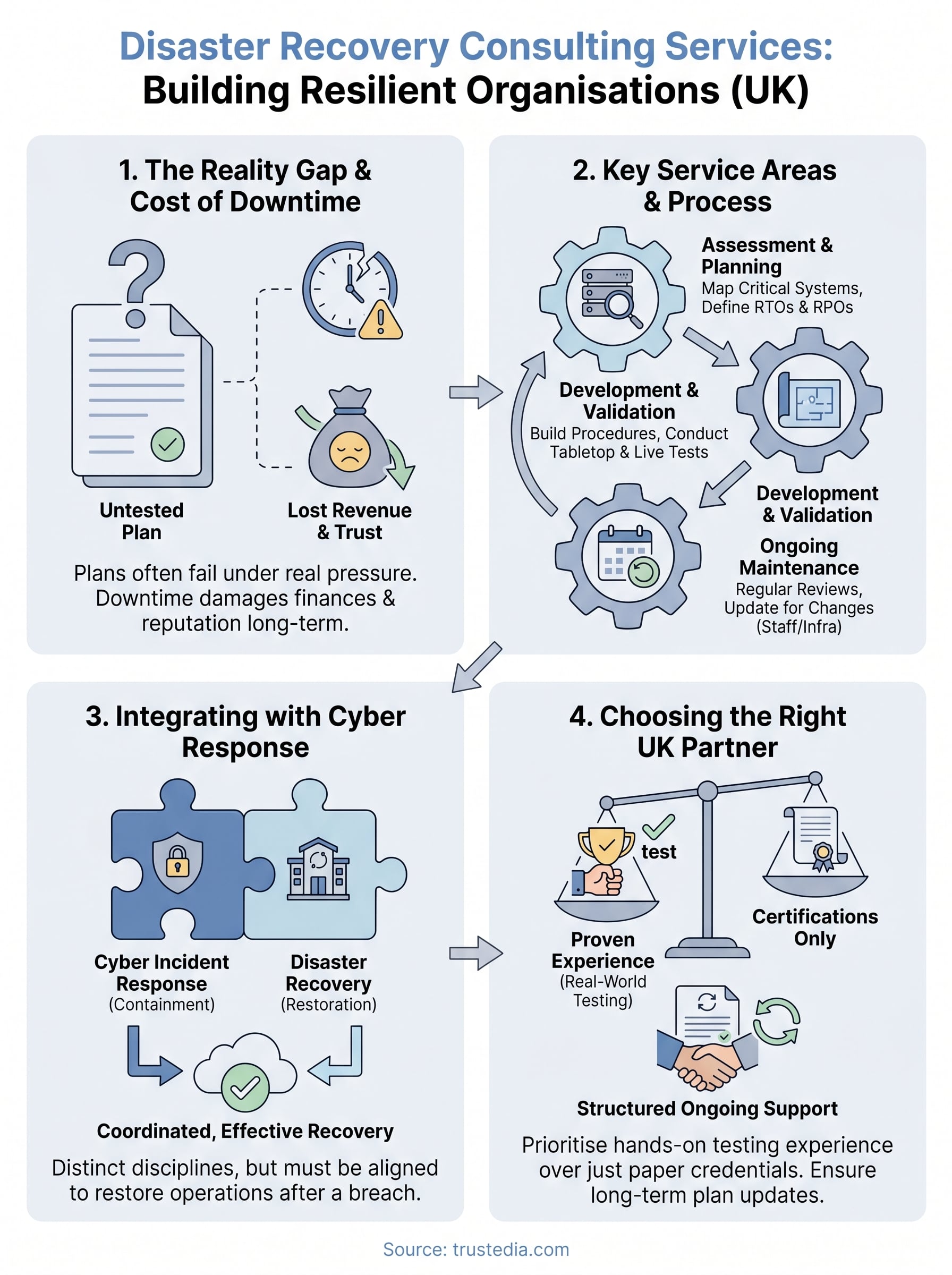
Most businesses treat disaster recovery as a box-ticking exercise until something goes wrong. A server failure, ransomware attack, or even a prolonged power outage can expose gaps in plans that looked fine on paper but fall apart under real pressure. Disaster recovery consulting services exist precisely because the gap between having a plan and having a plan that works is wider than most organisations expect.
The real cost of downtime
Downtime is expensive in ways that go beyond the obvious. Lost revenue and idle staff are the visible costs, but the longer-term damage to customer trust and supplier relationships often hits harder. According to research published by the UK Government’s Cyber Security Breaches Survey, a significant proportion of UK businesses that experienced a cyber incident reported a material impact on their operations. For smaller organisations without deep reserves, even a few days of disruption can be genuinely destabilising.
The organisations that recover fastest are those that made decisions about priorities, dependencies, and workarounds before the incident, not during it.
A consultant helps you work through those decisions in advance, mapping out which systems need to come back first, what your realistic recovery time objectives are, and where your plan currently has single points of failure.
Why in-house planning often falls short
Internal teams carry blind spots that outside expertise can surface quickly. Your IT staff know your systems well, but they may not have experience designing recovery architectures across multiple failure scenarios, or testing plans under conditions that genuinely mimic a crisis. Consultants bring pattern recognition from working across many environments, which means they can spot risks and gaps that are easy to miss when you are too close to your own infrastructure.
UK businesses also face growing pressure from regulators and insurers to demonstrate that recovery plans are documented, tested, and current. Meeting those expectations requires more than a Word document that was last reviewed two years ago.
What disaster recovery consulting services include
A good consultant doesn’t just write a plan and hand it over. Disaster recovery consulting services typically span several connected areas, each building on the last, to give you a recovery capability that actually works when you need it.
Risk assessment and recovery planning
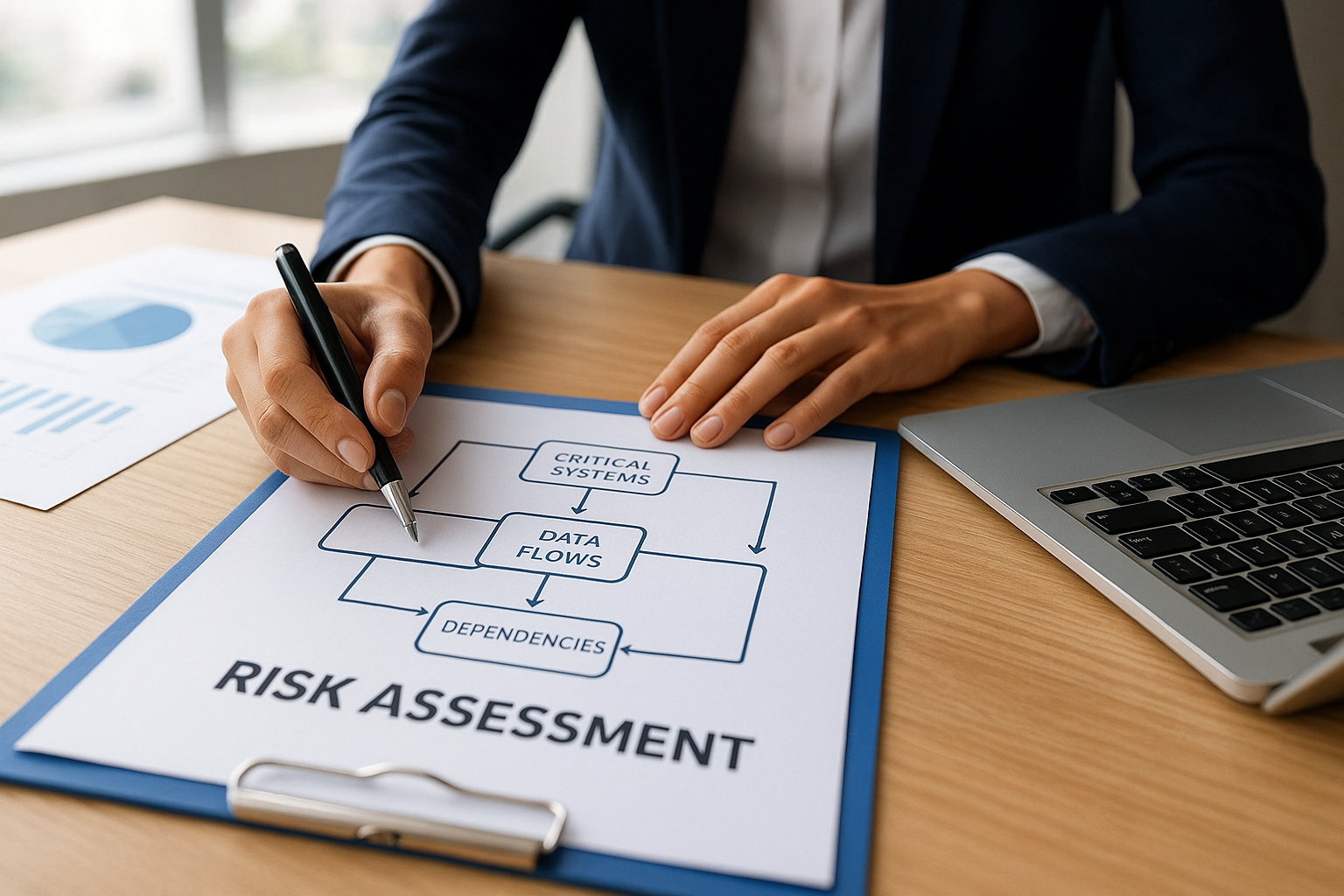
The first step is understanding what you’re protecting. A consultant will map your critical systems, data flows, and dependencies to identify which assets your business cannot afford to lose access to, and for how long. From there, they define your recovery time objectives (RTO) and recovery point objectives (RPO), which are the two core metrics that shape every recovery decision: how quickly you need to be back up, and how much data loss is acceptable.
Getting these numbers wrong at the planning stage is one of the most common reasons businesses find their recovery plan doesn’t fit their actual needs under pressure.
Testing and ongoing maintenance
Writing the plan is only part of the job. Tabletop exercises and live failover tests are how you verify that the plan works in practice, not just in theory. A consultant should run these regularly and document the outcomes clearly. Your business changes over time, and your recovery plan needs to keep pace: new systems, staff changes, and infrastructure updates all create gaps if the plan isn’t reviewed and updated on a set schedule.
How a disaster recovery engagement typically works
Knowing what disaster recovery consulting services include is useful, but understanding how an engagement unfolds helps you set realistic expectations and get the most value from it. Most engagements follow a structured sequence, and the pace depends on the complexity of your environment and what already exists to build on.
Discovery and scoping
A consultant starts by understanding your business: which systems support critical operations, what your tolerance for downtime looks like, and what recovery capabilities you already have in place. This phase typically involves interviews with key staff, a review of existing documentation, and a technical assessment of your infrastructure. The quality of this stage shapes everything that follows, so expect to invest real time in it rather than treating it as a formality.
Plan development and validation
Once the discovery is complete, the consultant builds or refines your recovery plan, setting clear RTOs and RPOs for each critical system and documenting the step-by-step procedures your team will follow during an incident. This isn’t handed over and forgotten.
A plan that’s never been tested is little more than a document with good intentions.
The final stage involves structured testing, whether a tabletop exercise or a live failover, to verify the plan holds up under realistic conditions. After testing, the consultant documents the findings and agrees a schedule for regular reviews to keep the plan current as your environment changes.
How disaster recovery consulting fits with cyber response
Disaster recovery and cyber incident response are closely connected disciplines, but they’re not the same thing. Your recovery plan sets out how you restore operations after any disruptive event, whether that’s a hardware failure, a flood, or a cyberattack. Cyber incident response focuses specifically on containing and investigating a security breach. In practice, most serious cyber incidents trigger your recovery plan, which is why the two need to be designed with each other in mind.
When a cyber incident becomes a recovery scenario
A ransomware attack, for example, doesn’t just encrypt your data. It can take down your entire production environment, force you off your primary systems, and leave your team making recovery decisions under pressure without a clear playbook. Disaster recovery consulting services help you build that playbook in advance, so your team knows exactly which systems to prioritise, which backups are clean, and who makes the calls when things move quickly.
The worst time to discover that your backups were also encrypted is during the incident itself.
Why the two disciplines need to work together
Your cyber response team needs to know what recovery actions are available to them and in what order. Your recovery plan needs to account for scenarios where your primary environment is actively compromised and cannot be trusted. A consultant who understands both sides can close the gap between these two plans, rather than leaving them as separate documents that contradict each other when tested under real conditions.
How to choose a disaster recovery consultant in the UK
Not every provider offering disaster recovery consulting services has the depth to back up their proposals. The UK market includes a mix of generalist IT firms that treat recovery planning as an add-on and specialists who have designed and tested plans across genuinely complex environments. Asking the right questions upfront saves you from investing in a plan that hasn’t been built by someone who has seen what failure actually looks like.
Prioritise experience over credentials
Certifications give you a baseline, but hands-on experience across real incidents tells you far more. Ask a prospective consultant how many recovery plans they have tested in the last two years, and what those tests revealed. A strong provider will be comfortable sharing specific examples of gaps they uncovered and how they resolved them, not just listing the frameworks they follow.
A consultant who has only written plans, but never tested them, cannot reliably tell you where plans break down under pressure.
Look for evidence of work with organisations similar to yours in size, sector, or infrastructure complexity. Failure points in a cloud-first SMB look very different from those in a hybrid enterprise environment.
Understand how they approach ongoing support
Recovery planning is not a one-off project. Your infrastructure changes, staff turn over, and new risks emerge regularly. Check whether the consultant offers structured review cycles and confirm they will update your plan as your environment evolves, rather than treating delivery of the initial document as the end of the engagement. Before committing, ask two direct questions:
- How often do you schedule plan reviews?
- How do you handle updates after significant infrastructure changes?
What to do next
If you’ve read this far, you already know that a recovery plan sitting untested in a shared drive isn’t protecting your business. Disaster recovery consulting services close the gap between having something on paper and having something that actually works when a real incident hits. The right consultant will assess your critical systems, set realistic recovery objectives, and test the plan against conditions that expose its weaknesses before you need it for real.
Your next step is straightforward: start the conversation with a provider who can demonstrate genuine experience, not just a list of certifications. Ask about testing frequency, plan review cycles, and how they handle cyber-specific recovery scenarios. The clearer you are about what you need from a consultant, the quicker you can assess whether they’re the right fit.
Talk to TrustedIA about your business continuity and disaster recovery needs and find out how we can help you build a recovery capability that works under real pressure.